
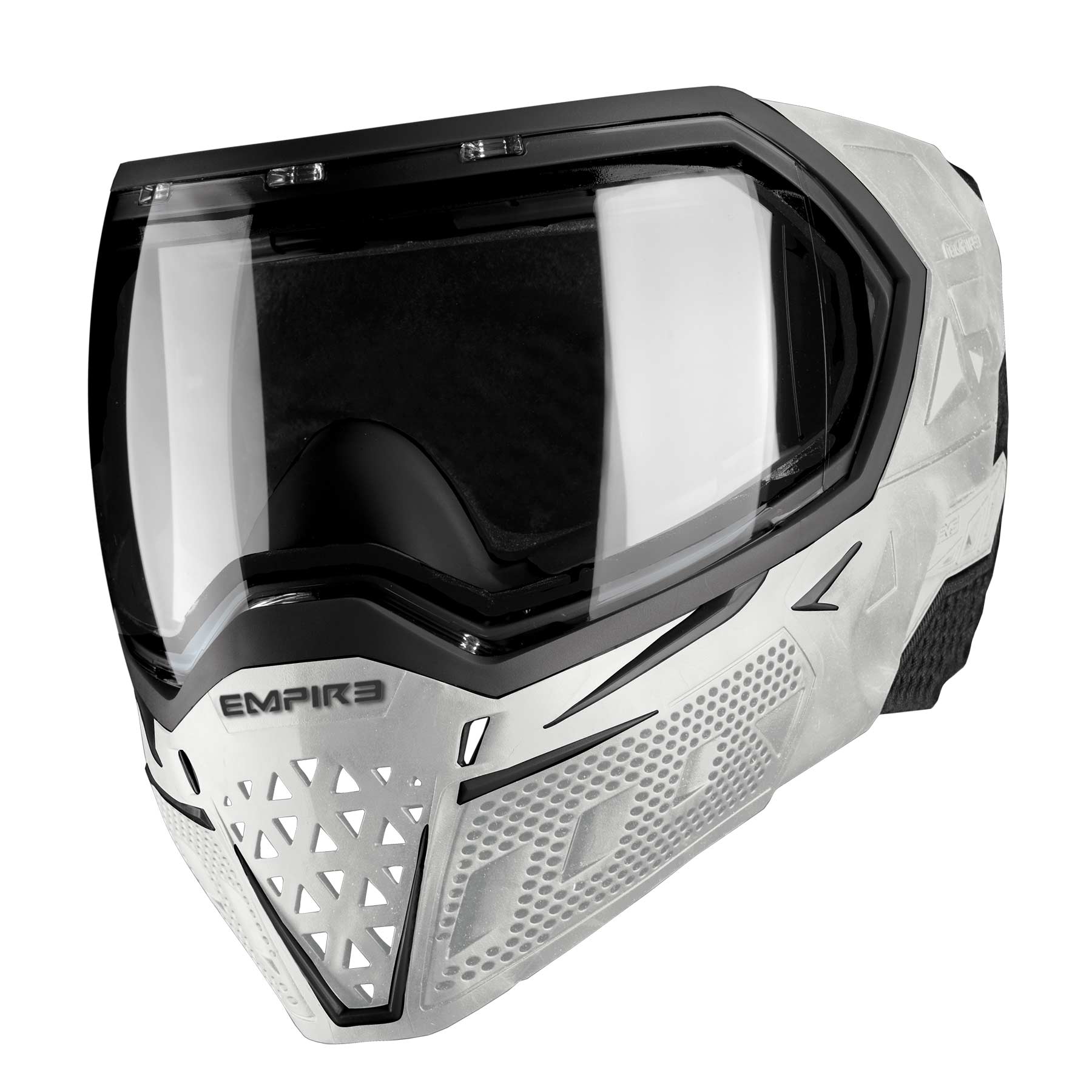
The mask is the most important item of paintball protective equipment. It should be designed and tested for paintball use, accepted by the venue, fitted securely and kept on throughout every active game area.
Non-negotiable mask rules
- Never use workshop glasses, ski goggles, airsoft eye protection or improvised face protection as a paintball mask.
- Never lift the mask in a live area, including when the lens fogs or a game appears to be over.
- Remove a cracked, separating, deeply scratched or insecure system from use.
- Follow the exact manufacturer’s instructions for cleaning, parts and replacement.
Use protection intended for paintball
ASTM F1776-26 is the current ASTM specification for eye, face and head protective devices used in paintball. It addresses impact and penetration protection as well as optical and coverage requirements. Customers do not need to interpret laboratory testing, but they should look for a genuine, complete paintball system from a recognised manufacturer and confirm that the venue accepts it.
Do not mix lenses, frames, straps or face components unless the manufacturer identifies them as compatible. A part that appears to fit may not lock or perform as the system was tested.
Pre-game inspection
- Lens: secure, clear and free from cracks, edge separation, distortion or damage that affects vision.
- Frame and retainers: intact, correctly assembled and not modified.
- Foam: attached and capable of supporting a stable, comfortable fit.
- Strap: elastic and hardware in good condition, with enough adjustment to prevent slipping.
- Coverage: eyes, face and ears covered to the level required for that session.
- Vision and hearing: the player can see terrain and marshal signals and can hear instructions.
How to check fit
Tighten the strap until the system is stable without causing pain. Turn the head, look down, bend and make a few controlled movements. The lens must remain centred over the eyes and the lower face section must not lift away. Hair, hats, glasses and head coverings should not sit under the seal or push the frame out of position.
Glasses under a mask
Tell the venue when booking and try the mask before the group enters the field. The mask must fit over the glasses without pressure that makes either item unstable. Consider a compatible insert system where available, and never remove the mask on the field to adjust fogged glasses.
Fogging and unsafe visibility
If the lens fogs during play, stop in a safe position, keep the mask on and signal a marshal. Move only as directed. Thermal lenses, suitable ventilation and manufacturer-approved anti-fog methods may help, but no product makes lifting a mask in a live area acceptable.
Fog can also be worsened by sweat, poor fit, blocked vents, unsuitable headwear or a wet inner lens. Address the cause in the safe area with staff assistance.
Cleaning and lens care
Follow the manual for the exact model. Manufacturer instructions commonly warn against household glass cleaners, solvents, abrasive materials and high heat because they can damage polycarbonate lenses and coatings. Some dual-pane thermal lenses must not be submerged or scrubbed on the inner surface.
Clean paint and debris promptly using the approved method. Allow all components to dry before storage, and protect the lens from crushing, sharp objects, chemicals and excessive heat.
When to replace a lens or mask
Replace a component when the manufacturer requires it, after specified impacts, or whenever inspection shows cracking, separation, deep damage, distortion, deterioration or a failed retaining system. Replacement intervals differ by model and use history; there is no responsible universal date that overrides the manual.
If the history of used eye protection is unknown, the safer choice is to replace the lens and inspect every component before use. Tape, glue, drilling and improvised repairs are not acceptable.
Rental and junior masks
Rental masks should be cleaned and inspected between users. Ask for another mask if the lens is badly marked, the strap slips, foam is missing or the fit is insecure. For smaller faces, staff should test stability rather than assuming the tightest strap setting is enough. Ask whether additional head or neck coverage is available for younger or nervous players.
Technical references
- ASTM F1776-26: Paintball eye, face and head protective devices
- Paintball Solutions: Manufacturer manuals and goggle guidance
- JT paintball goggle lens care manual
Use the game-day goggle checklist before every session and review the wider paintball safety checklist.