
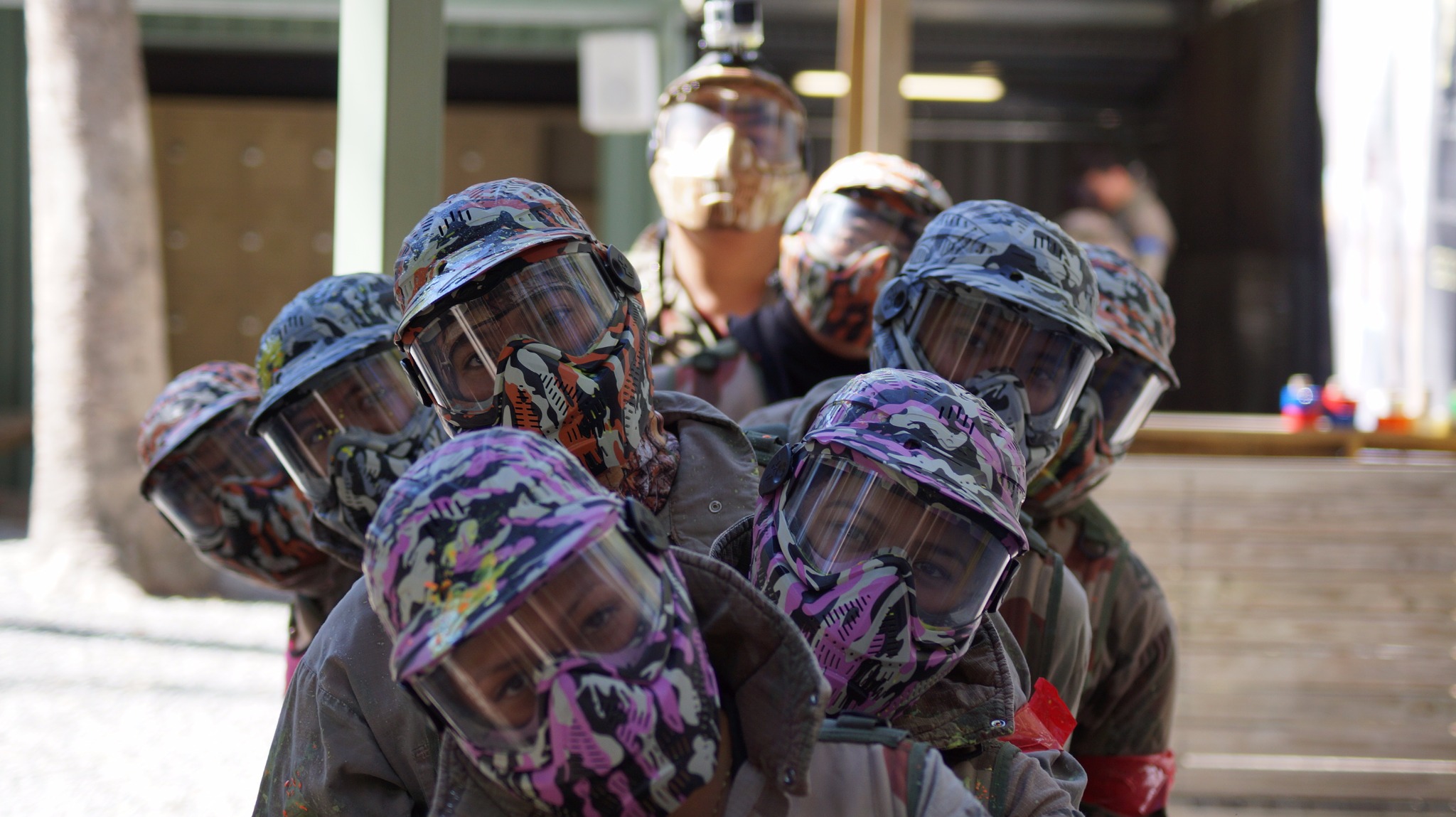
Paintball safety does not depend on a waiver or one piece of equipment. It comes from layers of control: a suitable venue, maintained equipment, a clear briefing, disciplined marker handling, separated safe areas, active marshals and a response plan when conditions change.
What good safety looks like
- Rules are demonstrated, enforced consistently and repeated when necessary.
- Eye and face protection remains on anywhere a marker can be discharged.
- Markers are checked, chronographed and physically blocked outside live play.
- Marshals can see the game, stop it quickly and respond respectfully to concerns.
- Incidents and equipment faults lead to recorded corrective action.
1. Plan the session before players arrive
The operator should assess the game area, weather, group age, experience, staffing and any special needs. Boundaries, trip hazards, structures, netting, entry points and spectator positions should be checked. The plan should identify who controls the session, who provides first aid and how emergency access will work.
Australian conditions also make heat, hydration, UV exposure, storms and bushfire conditions relevant. Safe Work Australia identifies heat illness, dehydration and reduced concentration as hazards. Operators should monitor conditions, schedule breaks and adapt or stop play when controls are no longer effective.
2. Check people and equipment
- Complete age, consent, emergency-contact and relevant medical checks.
- Fit each mask and inspect its lens, frame, foam and strap.
- Inspect markers, air systems, loaders and barrel-blocking devices.
- Chronograph markers using the venue’s documented limit and recheck when equipment or conditions require it.
- Remove damaged or doubtful equipment from service and identify it so it is not handed to another player.
3. Give a usable safety briefing
A briefing should be spoken and demonstrated, with time for questions. ASTM F2801-26 provides an international practice for paintball player safety briefings, while ASTM F1777 addresses game-site operation. These standards are useful references, but operators must still comply with Australian law and local permit conditions.
The briefing should cover mask-on and mask-off areas, barrel blocking, marker direction, trigger discipline, firing rules, cease-fire signals, elimination, field boundaries, prohibited physical contact, surrender or close-engagement rules, how to report a fault and how to leave the field.
A briefing has not worked if…
Players cannot identify the safe zone, do not know what the cease-fire signal means, or think they can lift a fogged mask on the field. The marshal should check understanding instead of treating silence as agreement.
4. Control the live area
Only authorised people with the required protection should enter an active game area. Masks stay on until a marshal has confirmed that markers are safe and players are in the designated mask-off area. Barrel-blocking devices should be fitted before markers leave the active firing area; a trigger safety alone is not a physical barrier.
Marshals should be positioned to observe behaviour and intervene. They need a reliable way to stop play, communicate with each other and separate a distressed or injured player from continued firing.
5. Manage the safe zone
A safe zone should be clearly identified and separated from live marker use. Marker muzzles should remain controlled, barrel-blocking devices should be fitted and dry firing should not be allowed where unmasked people are present. Spectators need a protected location and should not cross access points into the live area.
6. Give extra support to new and junior players
Use age-appropriate language and practical demonstrations. Help each player fit their mask, show them how to signal a marshal and explain that stopping is acceptable. Staff should watch for anxiety, poor visibility, communication difficulty, fatigue and heat stress rather than waiting for a player to raise a problem.
7. Prepare for first aid and emergencies
First-aid arrangements should reflect the site, group size, distance from emergency services and outdoor hazards. Staff should know how to summon help and preserve access for responders. Serious injury, loss of consciousness, breathing difficulty, eye exposure, suspected heat stroke or rapidly worsening symptoms require prompt professional assistance.
8. Record and learn
Useful records include daily field checks, equipment inspections, chronograph results, maintenance, first-aid responses, incidents, near misses and customer complaints. A repeated issue, even without an injury, is evidence that a control may need to change. Corrective action should have an owner and completion date.
Player stop-work checklist
A player should stop and contact a marshal if a mask moves or cracks, visibility becomes unsafe, a barrel blocker is missing, a marker appears to fire unexpectedly, people enter without protection, a marshal instruction is ignored, or they feel unwell. Do not continue merely because the game is underway.
Reference material
- ASTM F1776-26: Eye, face and head protective devices for paintball
- ASTM F2801-26: Paintball player safety briefing
- ASTM paintball and recreation standards catalogue
- Safe Work Australia: Managing the risks of working in heat
- Safe Work Australia: First aid in the workplace
Also see the AUPBA safety overview, equipment guide and jurisdiction guide.