
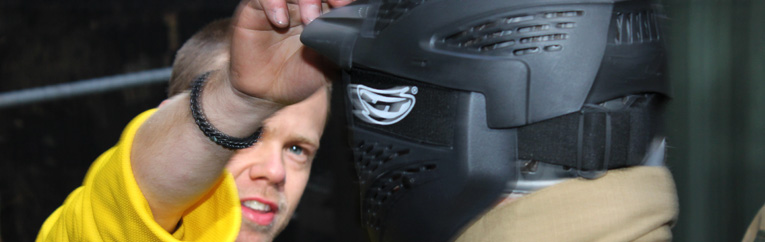
A responsible venue should tell customers what equipment is included, what they need to bring and how rental kit is inspected. Gear varies by venue, player age and format, but no extra padding compensates for poor mask use, unsafe marker handling or weak supervision.
Equipment priorities
- A purpose-built paintball mask with a secure fit is the essential protective item.
- A physical barrel-blocking device is required whenever a marker is outside the active firing area.
- Closed footwear and practical clothing reduce avoidable slips, scratches and exposure.
- Any damaged, dirty or badly fitting rental item should be exchanged before play.
Essential equipment
Paintball mask
Use eye and face protection made for paintball, accepted by the venue and appropriate to the session. The lens, frame, foam and strap should be intact. The mask must remain on whenever the player is in an active area or staff have not clearly declared the area safe.
Barrel-blocking device
A barrel sock or another venue-approved blocking device physically contains an accidental discharge. It should be correctly fitted before the marker enters any mask-off area. A trigger safety is useful but is not a substitute for barrel protection.
Marker and air system
Rental markers should be maintained, checked and chronographed by the operator. Players should not adjust velocity, air fittings or unfamiliar controls. Report leaks, damage, unexpected firing or unreliable safeties immediately.
Clothing and footwear
Long sleeves, long trousers or supplied overalls help with vegetation, rough surfaces and sun exposure. Closed shoes should suit uneven terrain and provide reliable grip. Avoid open footwear, dangling jewellery and loose items that can snag on obstacles.
Optional protection
| Item | What it may help with | What to check |
|---|---|---|
| Gloves | Knuckle and hand comfort; grip on equipment. | Full finger movement and no interference with controls. |
| Neck protection | Additional coverage of exposed skin. | Secure fit without restricting breathing or head movement. |
| Chest and back padding | Reduced discomfort over covered areas. | Breathing, mobility, heat load and strap condition. |
| Groin protection | Extra impact protection. | Correct size and no restriction of movement. |
| Full-head coverage | Additional scalp and rear-head coverage. | Compatibility with the mask, hearing and ventilation. |
Rental-kit handover
Staff should explain each item rather than passing over a bundle of equipment. The player should know how the mask strap works, where the barrel blocker sits, how to put the marker into a safe condition and where adjustments may be made.
If the equipment feels wrong
A slipping mask, distorted lens, loose armour, leaking marker or footwear problem should be fixed before entering the field. Ask for another size or item. Once play begins, signal a marshal and leave as directed; do not remove the mask or attempt a repair in the live area.
Weather and personal preparation
Bring water, sun protection and a change of clothes. Extra layers can add heat, so choose breathable clothing and use breaks. In cool or wet conditions, bring suitable layers without creating loose fabric around equipment. Tell staff about medical or accessibility requirements before the briefing.
Seven checks at the field gate
- The mask is secure, the lens is clear and vision is not distorted.
- The player knows exactly where the mask may be removed.
- The barrel-blocking device fits and its use has been demonstrated.
- The marker has been checked and the controls explained.
- Clothing and footwear suit the terrain and weather.
- Optional padding fits without restricting movement or overheating the player.
- The player knows how to stop, contact a marshal and report a fault.
After play
Tell staff about any impact, crack, leak, failed strap, fogging problem or unreliable control so the item can be quarantined and inspected. Owners should clean and store equipment exactly as its manufacturer instructs and follow local law for marker possession and storage.
Further guidance
Read the AUPBA equipment overview, mask guide, body armour guide and full safety checklist.